

No Healing Without Pain

There is no healing without first acknowledging the pain.

Pain does serve a purpose, but with our human eyes and mindset, we have limited vision.

We’re unable to see past the physical, the natural, the feasible. Unable to understand the “why.”

Why did “x” happen?

Why didn’t “x” happen?

Why are things this way?

Why do I keep making mistakes?

Why did I have to go through that?

Why isn’t God changing things sooner?

Why, why, why?

On our own, we cannot understand. On our own, we cannot have peace with these struggles. In fact, we may never really understand.

Maybe it’s just me, but I think perhaps we feel that if we understood, we would then feel that we had more control. Perhaps we sometimes seek understanding or answers in order to assess whether we think our situation is logical or justified.

Does the situation “make sense” to us?

Perhaps that means we don’t really trust that God will help us or work things out for us. We’re unhappy with His plan.

If you have felt this way, you are not alone. You are human.

Sometimes, things happen because we messed up. (Been there.) And sometimes, it’s because God is wanting to put something in us, work something greater in our lives, move things out of us that shouldn’t be there, or just teach us that He is sovereign and to trust His will.

Honestly? That’s often a difficult and painful process. It hurts. It’s uncomfortable.

Honestly, I never truly realized whenever you pray, “Lord, would make me more like you?” that it means you might have to go through some very painful things and feelings that Jesus also went through that make you more like Him. We think it just means we’re asking God to make us more kind and wise and loving and giving without any of the life experience and lessons that develop those traits within us.

Pain, rejection, betrayal, disappointment, loneliness, grief.

In one of my favorite verses in the Bible, Jesus was called a “man of sorrows.”

“He was despised and rejected by men, a man of sorrows and acquainted with grief; and as one from whom men hide their faces he was despised, and we esteemed him not.”

Isaiah 53:3 ESV

Contemplate for a second the meaning that verse carries. Right there in the middle of your grief and sorrow and pain and loneliness, Jesus sits next to you and says, “I know exactly how you feel.”

Jesus was rejected, endured overwhelming grief and pain, and even His disciples abandoned Him in His time of need.

He had asked them earlier, “Will you also go away?” And Peter said, “Where else would we go?” But then, even if for a moment, they left Him still when he was arrested and then crucified.

Jesus knows what it feels like to give and love and pour out and be met with betrayal and grief. When we experience these heavy emotions, that’s when we can truly have an intimate connection with God.

It’s in the middle of your grief that you can feel closer to Him than maybe you did in the happy times.

Pain cripples. The hurt wears us down. It’s an incredibly heavy burden to bear, especially when we pretend it isn’t really there. We mask it. We dismiss it. Tell ourselves get over it.

Grow up, walk it off, you’re fine.

Some tell us, “Get out of your emotions.”

Oh, if only people knew the detriment they cause when they give their callous, tone-deaf “advice” to people walking through desolate places that they’ve been blessed never to experience. Or maybe those people are not allowing themselves to heal either.

Those who understand what it’s like to experience pain and heal from it tell us, wisely, to surrender our burdens to God. This is much harder than it sounds when we want to pretend we have the control over it or when we can’t stop thinking about who or what caused the trauma.

But we have a finite emotional battery. We must rest. We can’t carry it all ourselves all the time, no matter how hard we try. God is the only one who is capable of carrying everything for us and never getting tired. And yet He also knows from His time on earth in human form what it’s like to feel weary and alone. He knows what that pain is like.

I’ve learned one can have a strange relationship with pain. You can feel it deeply, maybe more than others, and begrudgingly accept its seemingly constant presence, but you can refuse to ignore it or allow it to confine you. You can respect it for the purpose it serves.

See, pain teaches us about ourselves. Pain tells us, hey, there’s a wound here. There’s something that needs tended to, a hurt that needs treatment.

Pain can bring things to our attention that we didn’t even know were there.

There is no healing without first acknowledging the pain. From there, we can embrace the Healer and the one who takes all pain. But it takes time.

Healing doesn’t happen overnight.

Let yourself acknowledge the pain. It’s okay if you’re in the acknowledgment phase of healing for a while. Don’t rush it.

Bring it to God. Talk to a trusted friend or mentor. Go to therapy. Do something relaxing that you really enjoy. Find worship songs that speak to your situation and meditate on Scripture. Let God do a work in you in the healing.

Sometimes we have to slow down. Pause. Reflect.

Breathe, pray, and repeat.
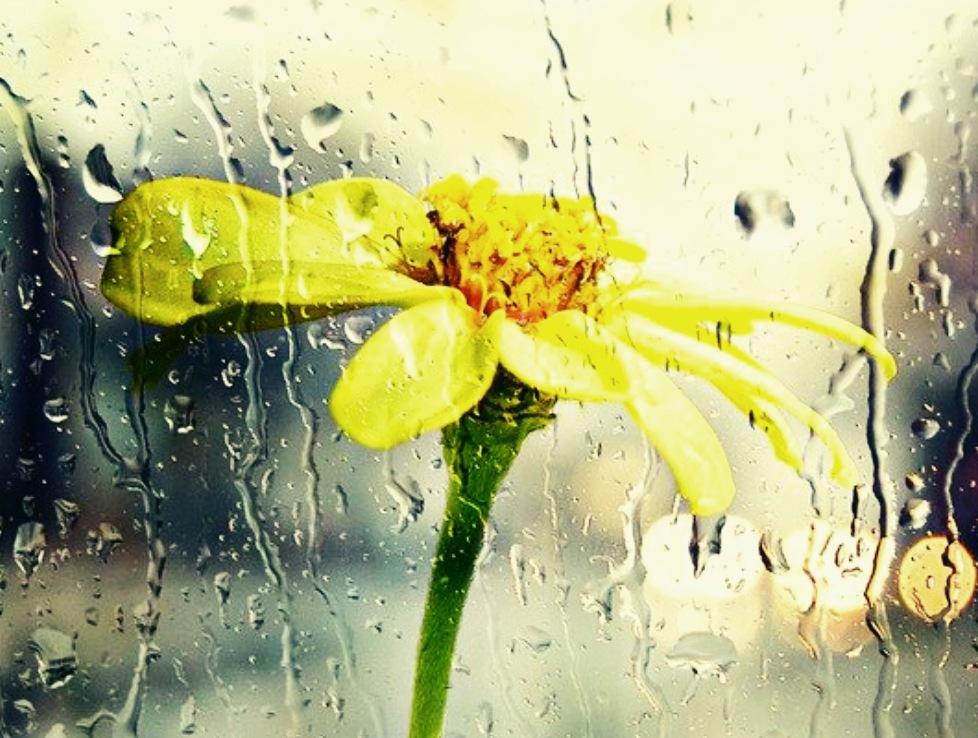
BPR Post Update + Thought of the Day

This week’s post is just a little blog update for all my readers and subscribers. I’ll be at Missouri’s senior youth camp this week, so there will be no blog post this Friday. However, I’m working on a Bible study post for Friday of next week that I hope you’ll enjoy.

My family and I are back from our vacation to the east coast in South Carolina, and as we were driving back in the rain through Tennessee, I had a thought that I wanted to share with you.

How often do we shut the windows of our heart and soul when things get a little uncomfortable? It starts pouring, life gets hectic, or God moves us in a direction that shifts us out of our comfort zone, and sometimes, we decide that we can’t take it all at the moment, so we close the window.

God, I don’t like this. I just can’t deal with it right now.

We don’t want the discomfort that comes with getting wet. After all, who wants that uncomfortable feeling of being in wet clothes in the rain?

Sometimes, the rain of His Spirit is pouring down, but we still have that window closed. We don’t want the discomfort that can accompany spiritual growth. So, we keep the window closed and prevent more of His Spirit from flowing into our lives.

If we want more of Him, we’ve got to open the window in our hearts and let Him in to nourish us, clean us out, and help us grow.

Just as a plant needs water for growth, so do we need the living water of God’s Spirit to pour into our lives and transform us into who He wants us to be.

Transformation and spiritual growth aren’t necessarily comfortable, but they are necessary.

My prayer is that we succeed in resisting our fleshly desires for an “easy way out” and instead continue to grow in Christ no matter what may come our way.

Again, there will be no new blog post until next Friday the 18th, but I encourage you to go back through the Breathe Pray Repeat archive and read any post you may have missed!

Thank you to all the BPR readers and subscribers who are still here. I appreciate each of you and pray this blog has blessed or encouraged you in some way.

Have a great week, everyone!

3 Ways to Maintain Our Spiritual Health

Chainmail, Soldier, Spiritual Battle, Protection

No one likes their flaws exposed. We wrap ourselves in armor to protect our egos, but are we wrapping ourselves in the armor of God to protect our souls?

“You don’t want people seeing the chinks in your armor,” I wrote in a creative nonfiction class last year. “Chinks. What does that mean? A weak point, a place of vulnerability, an opening for an attack from the enemy. A minor flaw, so says the online dictionary, or weakness in a plate of armor. A detrimental flaw. A special flaw. There’s an interesting phrase. A special flaw. It’s a special point of weakness that directs the enemy where to attack an otherwise invulnerable person. Are you invulnerable?”

Vulnerability is something of which many of us afraid. After all, who welcomes an attack from the enemy with open arms? We don’t want to be vulnerable, but sometimes, we allow ourselves to become vulnerable when we do not take care of our spiritual well-being. One missing or weak link can be deadly.

In a history class on the Spanish Conquest in 2019, I held a coat of chainmail as my professor lectured on the weapons of the Conquest. It was a small section of a coat of chainmail—about a 12-inch square. Remembering my professor’s lecture, I later described in my essay for a creative nonfiction class how the Europeans manufactured the chainmail while they rested between battles: “A blacksmith would take thousands of tiny metal or steel rings and carefully interlink them by hand. A single coat of chainmail could take months to finish if a skilled blacksmith worked 10-hour days.” If the blacksmith didn’t do his job correctly, it could spell death for the unlucky soldier wearing the flawed coat of chainmail. I became so fascinated with the concept of the process of creating a coat of chainmail that I reflected on its significance—and spiritual parallels—even more in my own writing.

“You imagine the misery of knitting steel for a living in 90-degree weather with 60-percent humidity in the Yucatan Peninsula,” I wrote, “trying to get a piece of chainmail done for a hotshot conquistador so he’s a little more likely to survive the arrows or stabbing spears of the Mayans than the footman who came over for gold and glory with only a helmet and a crossbow….You imagine the fever of smallpox getting to you while linking those steel rings and skipping a section right where the coat will slip over the conquistador’s left shoulder. If the Maya or Aztec crossbowmen spot the opening, the glory-seeking conquistador won’t last long. One small missing chink in his armor, and the obsidian arrow blade will tear through the chainmail as though it were linen instead of steel. A special weakness.”

At this point, you may be wondering why I’m going on about the history of developing chainmail in the Spanish Conquest and including excerpts from my own writing. As a deeply private person, vulnerability has always been a relevant topic to me. Those of us who like to keep things close to the chest tend to guard ourselves with more caution. But there are times when we may all be guilty of caring more about preserving our pride than protecting ourselves from spiritual attacks.

When we’re not prepared and protected, we give the enemy an opportunity to attack. There are at least 3 things we can do to ensure our chainmail is not missing any links:

1.) Stay prayed up.
2.) Stay well-read.
3.) Stay clothed in the armor of God.

(11) “Put on the whole armour of God, that ye may be able to stand against the wiles of the devil.
(12) For we wrestle not against flesh and blood, but against principalities, against powers, against the rulers of the darkness of this world, against spiritual wickedness in high places.
(13) Wherefore take unto you the whole armour of God, that ye may be able to withstand in the evil day, and having done all, to stand.”
~Ephesians 6:11-13 (KJV)

Do we have on the helmet of salvation? Are we carrying the sword of the Spirit? How’s our daily Bible reading? Are we keeping up a daily prayer life?

The armor of God is necessary for our spiritual protection. We are warriors in the Lord’s army, and our battles are spiritual. Just as soldiers must keep their armor in its best condition to protect themselves from harm, so must we keep our armor in its best condition through daily prayer & Bible reading. This also requires frequent checkups of our armor to ensure we’re not missing a crucial piece.

If we aren’t maintaining our spiritual armor, then we are allowing ourselves to be vulnerable to the enemy’s attacks due to our own laziness or carelessness. Without a helmet on, we expose our minds to sinful thoughts. If our shield of faith is missing, then we expose ourselves to the enemy’s arrows.

Proper preparation and protection will help us repel the enemy’s attacks.

Though God is always with us to win the victory, we cannot use His protection as an excuse to be careless with the upkeep of our spiritual well-being.

We may labor under harsh conditions as the blacksmith labored in the Spanish Conquest to develop a flawless coat of chainmail, but our labor is not in vain when we approach our work with purpose and dedication.

We labor in the Kingdom, we pray, and we study the Word so that we can withstand the attack of the enemy, so that there are no chinks in our spiritual armor, so that there are no missing links in our coat of chainmail.

One missing link can be deadly.

So, examine yourself each day and ask this question:

Are you vulnerable?